Description
Orientation:
This educational program of the Master’s Degree in Human Rights and Constitutional Justice is professionally oriented.
Justification
In recent years, law has developed not only the classic role of shaping a conceptual framework and reference for human conduct, but also that of constituting itself as the reference for the determination of democratic culture and the establishment of the so-called constitutional and legal State; that is, to build an order based on a system of law, created under the idea of a substantially communicative community, not only in the theoretical discourse, but fundamentally in the instrumental one.
The Master’s Degree in Human Rights and Constitutional Justice that we present here is of special importance because today Higher Education faces new challenges caused by the accelerated changes in all areas of knowledge and human practice, it is therefore of vital importance that the professionist has a solid and deep approach to knowledge and competencies both in the theoretical field,and in the professional field of the various issues of human rights and constitutional justice so that they are able to face the challenges that society imposes on us through advanced professional training.
Under this premise, the logic of the juridical phenomenon, not only requires updating in regards to new experiences, but mainly renovating itself with reference to the schemes of the various processes of teaching-learning, of the own logics of law or the disciplines created under the warp of juridical structure[1]. So one of the most important tasks in current juridical theory is the development of a theory of norms and action that take into account the demands of a modern society of information[2].
Facing the described aspect, and the unavoidable premise that every postgraduate studies in law need to be seen in light of the idea that it constitutes a central axis in the processes of creation and recreation of juridical norm, not only within the social system in which the normative order is generated, but also within society’s own dynamics, which requires that its processes of adaptability and correction walk in the same direction and identical velocity in which its actors and relationships move[3]; the Master’s in Human Rights and Constitutional Justice, justifies its existence by offering a professionalizing focus detailed in two fundamental aspects of the State and the law in any contemporary democratic society, namely, human rights; and, constitutional justice; which constitute an interactive system between society and its norms, which in turn, with their respective procedures function as factors of change and the consolidation of the appreciated constitutional and legal rule; in this regard, it is contributed to the demands of the defense of protection of human rights in the geographical regions of influence: the national south and southeast.
On the other hand, the referred thematical axles of timeless validity, fundamental transcendency and inalienability in every modern state, by themselves, along their respective origins and state-building have demonstrated their value and usefulness, not only by the limitations of ruler’s powers, but also the tutoring, protection and in its case, the reparation of human rights, which have constituted an interactive system between society and its norms, that in turn, with their respective procedures work as factors of change and consolidation of the appreciated constitutional and lawful state.
In virtue of the referred perspective, the Master’s in Human Rights and Constitutional Justice, of a professionalizing manner, is directed to two big sectors: the newly graduated of the programs of bachelor’s degree in law to the effect that they broaden their labor opportunities; and professionals in their labor exercise who wish to deepen and perfect their competencies in their thematical axles.
Said pretension is supported with a Basic Academic Nucleus, integrated by full-time professors who count with a notable trajectory professionally and academically, the same that grants the necessary aid for the generation and the strengthening of effective and efficient competencies in the performance items.
Under the same perspective, the program possesses in the denominated Intervention projects, as transcendental aspect, in virtue that through these the alumni formulate realistic proposals, factual and creative, that then applied allow to realize improvements or solving a juridical-social problematic about any aspect that affects social, political and juridical life. Which also allows the early detection of legislative issues or deficiencies and the efficient creation of proposals for their opportune solution, since to the extent that a constitution is inserted in the socio-cultural and political medium that promotes it, said ordainment will have efficacy and normative relevance, it is there that the importance and constitutional openness as promoter of Human Rights and Constitutional Justice in the social, political and economical reality of a society.
Demand and viability of the education program
The demand and viability of the program have guaranteed its acceptance and demand in virtue of the more than fifteen thousand students that annually graduate, in just the Veracruz entity [1], the diverse educational programs in law imparted by Educational Institutions of a private type [4] and in public universities (Universidad Popular Autónoma de Veracruz – UPAV); and Universidad Veracruzana in its different regions: Coatzacoalcos, Boca del Río, Poza Rica, Córdoba-Orizaba and Xalapa[5].
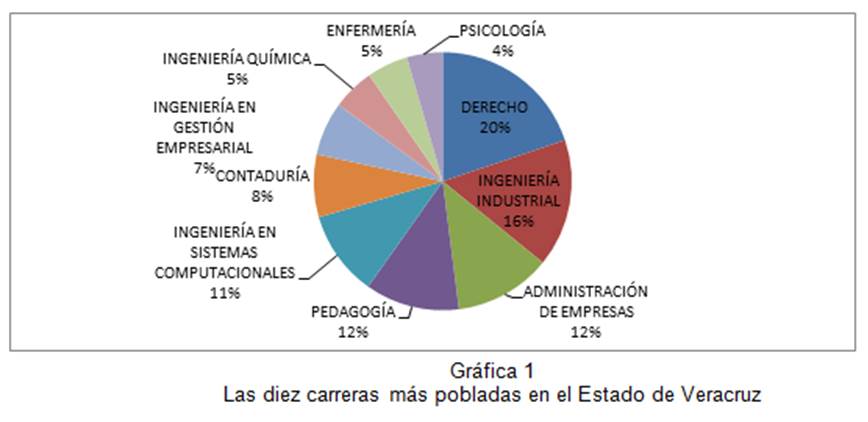
Gráfica 1. Las diez carreras más pobladas en el Estado de Veracruz
In addition, in a search for studies in post-graduate programs that are offered in the discipline (graphic 2), specifically in the area of human rights and constitutional justice, it can be affirmed that said market is not being tended to in the State of Veracruz, nor in the South-Southeast region of the country, since there isn’t any other master’s program that covers both subjects; here it is deemed important to signal that the master’s studies that are offered in the country are either in human rights; ‘amparo’ suit; or, constitutional law, a situation that forces the interested to move out of their respective federal entities.
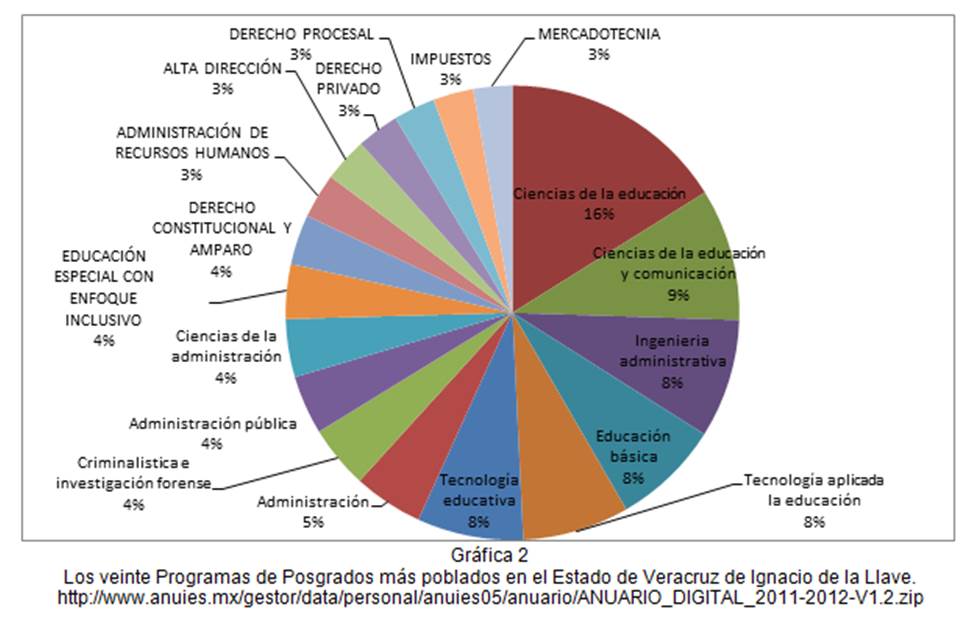
Gráfica 2. Los veinte Programas de Posgrados más poblados en el Estado de Veracruz de Ignacio de la Llave.
|
INSTITUCIONES PÚBLICAS QUE OFERTAN PROGRAMAS EDUCATIVOS AFINES A LA MAESTRÍA QUE SE PRESENTA |
||
|
ESTADO |
UNIVERSIDAD |
POSGRADO |
|
VERACRUZ |
UPN (Universidad Pedagógica Nacional) |
Especialización en Derechos Humanos |
|
TLAXCALA |
Universidad Autónoma de Tlaxcala |
Maestría en Derecho Constitucional y Amparo |
|
Universidad Autónoma de Tlaxcala |
Maestría en Derecho Constitucional y Procesal Constitucional |
|
|
Universidad Autónoma de Tlaxcala |
Doctorado en Derecho |
|
|
PUEBLA |
Benemérita Universidad Autónoma de Puebla |
Maestría en Derecho |
|
Benemérita Universidad Autónoma de Puebla |
Doctorado en Derecho |
|
|
OAXACA |
Universidad Autónoma Benito Juárez de Oaxaca |
Maestría en Derecho Constitucional |
|
Universidad Autónoma Benito Juárez de Oaxaca |
Maestría en Derechos Humanos |
|
|
TABASCO |
Universidad Juárez Autónoma de Tabasco |
Maestría en Derecho Procesal Constitucional |
|
Universidad Juárez Autónoma de Tabasco |
Maestría en Derecho |
|
|
Universidad Juárez Autónoma de Tabasco |
Maestría en Métodos de Solución de Conflictos y Derechos Humanos (PNPC) |
|
|
Universidad Juárez Autónoma de Tabasco |
Doctorado en Métodos de Solución de Conflictos y Derechos Humanos (PNPC) |
|
|
Universidad Juárez Autónoma de Tabasco |
Doctorado en Derecho |
|
|
CHIAPAS |
Universidad Autónoma de Chiapas |
Maestría en Derecho Constitucional y Amparo |
|
Universidad Autónoma de Chiapas |
Doctorado en Derechos Humanos |
|
|
INSTITUCIONES PRIVADAS QUE OFERTAN PROGRAMAS EDUCATIVOS AFINES A LA MAESTRÍA QUE SE PRESENTA |
||
|
ESTADO |
UNIVERSIDAD |
POSGRADO |
|
VERACRUZ |
Universidad Cristóbal Colón |
Maestría en Derecho Constitucional y amparo |
|
Universidad Euro Hispanoamericana Xalapa |
Maestría en Derecho Constitucional y Amparo |
|
|
Universidad Hernán Cortés Xalapa |
Maestría en Derecho Constitucional y Amparo |
|
|
Universidad de Xalapa |
Maestría en Derecho Constitucional y Juicio de Amparo |
|
|
Universidad de altos estudios Hispanoamericana |
Maestría en derecho constitucional y Amparo |
|
|
Universidad el Valle del Grijalva Coatzacoalcos |
Maestría en Derecho Constitucional (en trámite) |
|
|
TLAXCALA |
Instituto de Ciencias Universitarias Mundial |
Maestría en derecho Constitucional y Derechos Humanos |
|
Universidad Abierta de Tlaxcala |
Maestría en Derecho |
|
|
PUEBLA |
Universidad de la Sierra A.C. |
Maestría en Derecho Constitucional y Amparo |
|
Universidad UNILIDER |
Especialidad en Derecho Constitucional y Amparo |
|
|
Instituto Universitario Puebla |
Maestría en Derechos Humanos |
|
|
Universidad Iberoamericana Puebla |
Maestría en Derecho Constitucional y Amparo |
|
|
Universidad Iberoamericana Puebla |
Especialidad en Amparo y Procesal Constitucional |
|
|
Escuela Libre de Derecho de Puebla |
Maestría en Derecho Constitucional y Amparo |
|
|
Centro de Ciencias Jurídicas de Puebla |
Maestría en Derecho Constitucional y Derechos Humanos |
|
|
OAXACA |
IEU (Instituto de estudios universitarios) |
Maestría en Derecho y Ciencias penales |
|
TABASCO |
Universidad Olmeca |
Maestría en Derecho Constitucional |
|
CHIAPAS |
Universidad del Valle de México |
Maestría en ciencias penales |
|
Universidad del Valle de México |
Maestría en Derecho fiscal |
|
|
IESCH (Instituto de Estudios Superiores de Chiapas) |
Maestría en Derecho |
|
|
IESCH (Instituto de Estudios Superiores de Chiapas) |
Maestría en Derecho Constitucional y Amparo |
|
|
IESCH (Instituto de Estudios Superiores de Chiapas) |
Maestría en Derecho Penal |
|
|
IEU (Instituto de estudios universitarios) |
Maestría en Derecho y Ciencias penales |
|

Now, regarding the variant of insertion of the graduated from the Master’s in Human Rights and Constitutional Justice in the working field this one is acceptable (see graphics 3 and 4) since for the construction and functionality of the institutional operativa design in charge of protection both Human Rights, and the Constitution itself. It i required necessarily of a conjunction of operators with sufficient tecnical capacities; in such context the working field is vast, we fin institutions both public and private. In the former are found the broad organic structures of the centralized, parastatal, and paramunicipal types, of the Executive Power on its three scopes (federal, statal and municipal); the justice proxy, as well as the extense structures of the Judicial Powers, federal and statal; and of course the administrative structures both from the Union Congress in its two chambers, of Senators and Deputies, and the Local Legislatures. The above withput forgetting the multiple non-jurisdictional organisms of protection to human rights existing both in the federal scope, as in the local relative to the promotion, protection and defense of human rights; inter alia. The Institutions of superior education public and private; as well as the non-governmental organization interested as well in the protection and defense of human rights.
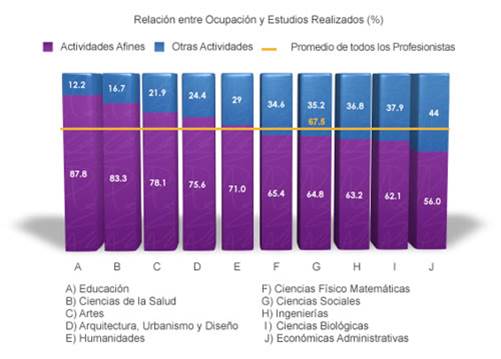
Número total de personas ocupadas en este estado durante el segundo trimestre de 2012. Incluye únicamente a la población remunerada. Fuente: Portal del empleo.
http://www.empleo.gob.mx/es_mx/empleo/tendencias_de_empleo_de_las_carreras_profesionales
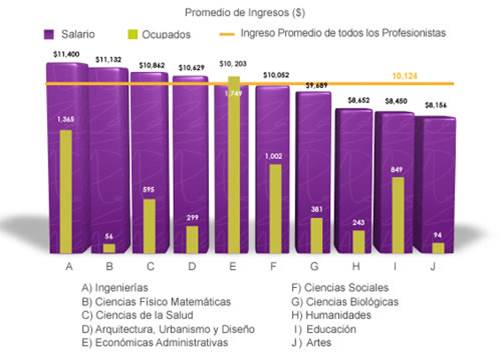
Fuente: Portal del Empleo
http://www.empleo.gob.mx/es_mx/empleo/tendencias__de_empleo_de_las_carreras_profesionale
Mission.
To train professionals with the knowledge and skills necessary for the effective and efficient initiation of procedures in the field of human rights (national and inter-American levels), and constitutional justice (national level) under the requirements derived from globalization; of the constant updating of the fundamental norm and its repercussions at the regional level.
Vision.
To be a postgraduate degree of prestige, quality and relevance that provides its students with a broad and deep knowledge in the field of human rights and constitutional justice, which allows them to act professionally in the strengthening of a constitutional state and the rule of law.
General objective.
The Master’s Degree in Human Rights and Constitutional Justice will train Masters who will perform effectively and efficiently in the use of national and inter-American instruments for the protection and defense of human rights; as well as in the initiation of the mechanisms of constitutional justice established by national law, with a holistic and ethical approach.
Particular objectives
By the end of the master’s studies, the graduates will be capable of:
- Applying the mechanisms of defense and protection of human rights in the Mexican and Interamerican systems.
- Analyzing the types, characteristics and ways to incorporate the instruments of defense of the constitutional justice system in Mexico and its material execution.
Goals
- To consolidate an Educational Program that propitiates and incites the promotion, protection and effective defense of human rights as a fundamental element and priority in the construction of a democratic and lawful state.
- To favor the academic and professional consolidation of at least 90% of the Basic Academical Nucleus members; ensuring the strengthening of conditions in which they count for the seeding of generational lines and applying the knowledge that recognized the educational program and that they develop.
- Reaching 80% on the index of graduation by generational cohort.
- Creating permanent connections with annual links with at least five dependencies on the public sector related with the LGAC’s;
- Reaching the recognition of the educational program from CONAHCYT and the Postgraduate Quality (PNPC)
[1] Krawietz, Werner, “Sistemas jurídicos modernos en transición. Sobre la comunicación jurídica en las teorías contemporáneas de las normas y de la acción” en Doxa, número 21.1, 1998, p. 123-143.
[2] Ídem
[3] Platas Martínez, Arnaldo, “Posgrado en Derecho. (Una aproximación teórica analítica)” en Valencia Carmona, Salvador, Educación, Ciencia y Cultura. Memoria del VII Congreso Iberoamericano de Derecho Constitucional, IIJ-UNAM, México, 2002.
[4] Según datos del Anuario Estadístico del Ciclo escolar 2011 – 2012 elaborado por la ANUIES la Carrera de Derecho en el Estado de Veracruz es la más poblada con 17,228 alumnos. Ver gráfica 1
Fuente: http://www.anuies.mx/gestor/data/personal/anuies05/anuario/ANUARIO_DIGITAL_2011-2012-V1.2.zip
[5] Universidad Xalapa (UX); Instituto Veracruzano de Estudios Superiores (IVES); Universidad del Golfo de México; Universidad Eurohispanoamericana (UE); Instituto Universitario Puebla (IUP); Centro Mexicano de Estudios de Posgrado (CEMEP); Universidad Hispanoamericana; Universidad Cristóbal Colón; Centro Universitario Hispano Mexicano; Universidad Jean Piaget; Unimex; Universidad del Valle de México (antes Villa Rica); Universidad de Oriente (UO); Universidad de las Naciones; Universidad Politécnica de Veracruz (UPV); Escuela Superior de Negocios (ESUN); Centro Universitario Las Américas de Veracruz; Centro de Estudios Superiores de Los Tuxtlas (CEST); Centro de Estudios Superiores de Veracruz (CESUVER); Universidad de Ciencias y Humanidades de Veracruz Quetzalcóatl; Universidad La Paz; Centro Universitario de Coatzacoalcos (CEUNICO); Instituto Tecnológico y de Estudios Superiores René Descartes; Centro de Estudios Superiores de México; entre otras.
