|
Development of microdevices for the control and treatment of degenerative vision disorders
Dr. Natiely Hernández Sebastián Center for Research in Optics Dr. Natiely is a distinguished researcher who holds a degree in Electronic Engineering from the Instituto Tecnológico de Oaxaca. She advanced her academic credentials at the National Institute of Astrophysics, Optics and Electronics, where she earned both her Master’s and Doctoral degrees in Science with a specialization in Electronics. Currently, she serves as the Technical Director of the Laboratorio Nacional Conahcyt in Microtechnology and BioMEMS at the Center for Research in Optics. As a Level 1 member of the National System of Researchers, her expertise is widely recognized in her field. Dr. Natiely research focuses on developing sensors, actuators, and wireless communication systems using microelectronics and flexible electronics technology. She has a particular interest in microelectromechanical systems for medical applications (BioMEMS), where her innovations have contributed significantly to the field. Her scholarly contributions include publications in high-impact indexed journals and the development of intellectual property. She has supervised numerous bachelor’s and master’s theses while maintaining an active role in teaching, mentoring, technology development projects, and scientific outreach activities Strategies, Techniques and System for powering low-maintenance and maintenance-free Wireless Sensor Nodes
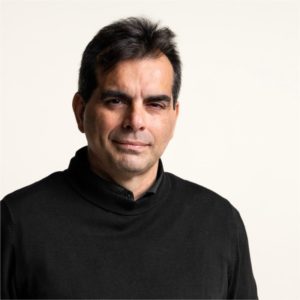
Dr. Roberto La Rosa STMicroelectronics, Catania, Italy Dr. Roberto La Rosa is an esteemed electrical engineer with a Master’s degree from the University of Palermo and a Ph.D. from the École Polytechnique Fédérale de Lausanne. His doctoral thesis, which merited the prestigious Thomas Gessner Award in 2023, concentrated on pioneering strategies and techniques for the autonomous operation of wireless sensor nodes via energy harvesting and wireless power transfer. Since his tenure beginning in 1997 at STMicroelectronics, Dr. La Rosa has been instrumental in various capacities. His expertise has been integral in the design of high-frequency Phase-Locked Loops (PLLs) for clock generation and signal recovery, fiber-optic transceiver systems, power management integrated circuits, and the development of analog, digital, and mixed-signal bipolar and CMOS circuits. His proficiency in IC mixed-signal design and ultra-low power applications has been pivotal in advancing these technological areas. Currently, as a Research Senior Staff Member at STMicroelectronics Catania, Dr. La Rosa’s research is focused on Ultra-Low Power applications, Wireless Power Transfer, Energy Harvesting, and high-frequency power conversion. He has authored several influential papers and holds multiple patents in these fields, underscoring his leadership in energy autonomy for wireless sensor networks. In addition to his research activities, Dr. La Rosa is an Associate Editor of the IEEE Transactions
|
|
Polymer composites for EMI-shielding applications Dr. Hülya Kaftelen Odabaşı Assoc. Prof. in the Department of Aircraft Maintenance and Repair, School of Civil Aviation, at Fırat University, Turkey She received her BSc. degree in Ceramic Engineering from Dumlupınar University, Turkey, in 2000. She earned her MSc. and Ph.D. degrees in Metallurgical and Materials Engineering from Mersin University (2005) and İstanbul Technical University (2011), respectively. In 2009, she worked as a researcher in the Dept. of Chemical and Materials Engineering, University of Alberta, Canada, by receiving TUBITAK International Research Scholarship. During her stay, she focused on fabrication of carbide reinforced aluminum composite droplets by impulse atomization which was a part of Ph.D. work. Before joining Fırat University, she worked for four years as an Assist. Prof. at Karadeniz Technical University and her research has been focused on the synthesis of nanoparticle (Ag, Cu and Au) /graphene electrode materials for polymer actuators, dynamic analysis of graphene-based ionic polymer actuators, electrophoretic deposition of Ag nanowire doped graphene/ PVDF electrode materials for artificial muscles, and production of hard (permanent) magnets for hybrid and electric vehicles. Last six years, she and her team focused on the development of polymer composites for electromagnetic interference (EMI) shielding applications, and RGO/graphene-reinforced carbon fiber polymer composites with enhanced electrical conductivity properties and lightning protection performance for aircraft composites. She is involved in many national projects related to the development of polymer composites in the fields of electromagnetic shielding, radar absorption, UV shielding. She is also currently leading an international project titled ‘Development of highly efficient sandwich- structured thermoplastic polymer composites in bulk and microcellular form for electromagnetic interference shielding applications’ within the scope of Turkey-Uzbekistan (Tubitak-MID) bilateral cooperation. She carries out research for piezoelectric materials, semi-conductor materials, CFRP composites, metal matrix composites, powder fabrication processes (atomization, powder metallurgy) and hard magnets. Challenges and opportunities in testing and qualification of structural materials for fusion tokamaks
Dr. Enrique Jimenez-Melero UKAEA Joint Chair in Materials for Fusion School of Metallurgy and Materials, University of Birmingham, UK Prof. Enrique Jimenez-Melero holds since 2024 the UKAEA Joint Chair in Materials for Nuclear Fusion at the School of Metallurgy and Materials of the University of Birmingham, where he leads the ‘Structural alloys for fusion technologies’ research group, and also the development of novel beam lines and sample environments for irradiating nuclear-reactor materials using intense high-energy ion and neutron beams. In 2005, he finished his PhD about ‘Structural and magnetic transitions in RCrO4 oxides (R= rare earth)’ at the Universidad Complutense de Madrid (Spain). He then started working as a research fellow at the Delft University of Technology (The Netherlands) on phase transformations in high-strength automotive steels using high energy synchrotron X-ray µ-diffraction in situ under thermo-mechanical loading. In 2012 he moved to the UK and spent 12 years working as an academic at the University of Manchester, as part of their Materials Performance Centre, assessing the radiation response of nuclear materials for fission and fusion power plants, and the radiation impact on the microstructure and the structural integrity of the material. His expertise lies on radiation-material interactions, radiation damage structures, micromechanics and structural integrity of complex high-temperature steels and refractory alloys for the nuclear industry. He is also interested in applying advanced characterization techniques, such as (in-situ) high-energy synchrotron X-ray and neutron scattering, analytical electron microscopy or positron annihilation spectroscopy, for material characterisation and micromechanical studies. He has >20 years of experience in attracting continuous research funding, and in engaging with materials-relevant stakeholders in the nuclear research community, nuclear industry and related supply chain, and in translating research outputs into industrial solutions. He has published > 70 scientific articles in international peer-reviewed journals and graduated 12 PhD students as principal supervisor
Advancement in Supercapacitors for Future Aerospace Applications
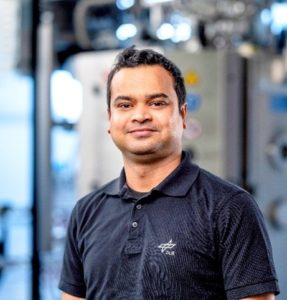
Dr. Apurba Ray German Aerospace Center, Institute of Materials Research, Cologne, Germany Dr. Apurba Ray is currently working as a Research Scientist at the Dept. Of High Temperature and Functional Coatings, Institute of Materials Research, German Aerospace Center (DLR) in Cologne on the projects funded by the DLR Space Administration to manufacture and test supercapacitors for satellite applications. He works diligently as a researcher and stands as one of the lead persons in several European Union (EU)-funded projects, PHOENIX (Grant agreement ID: 101103702) and GRAPHERGIA (Grant agreement ID:101120832) focused on development of high performance, long cycle enables electrochemical energy storage devices, mainly Lithium-ion battery and supercapacitors. He has outstanding academic records, securing first class all throughout his academic career. He was awarded the INSPIRE Scholarship in 2008 for being among the top 1% students of India, from the Department of Science and Technology (DST), Govt. Of India. He also received the renowned Senior Research Fellowship in 2018 from Council of Scientific and Industrial Research (CSIR), Govt. Of India. Dr. Ray accomplished his PhD in Jadavpur University, India in 2019 in the field of high-power supercapacitors. Afterwards, he was selected for the DLR-DAAD Post-doctoral Research Fellow in Germany and completed his post-doctoral research in 2022. He has strong expertise in developing advanced, ecofriendly, cost effective, high-performance cells for electrochemical energy storage systems, mainly supercapacitors and batteries using advanced electrode and various polymer electrolyte materials applied in aerospace, domestic, electronic and mobile equipment. He possesses an excellent depth of knowledge and experience in testing and electrochemical characterization of electrochemical energy storage materials. To date, he has published 44 research papers and 3 book chapters in various international journals. He served as guest editor of the special issue in the journal ‘Materials’. He has been serving as one of the Topical Advisory Panel Members in journal ‘Coatings’ and ‘Materials’ from MDPI. He is one of the Associate Editors for Supercapacitors in Frontiers in Batteries and Electrochemistry. Till today, he has actively reviewed > 80 research papers of several highly reputed international journals such as Advanced Composites and Hybrid Materials, Scientific Reports, Nanomaterials, Batteries etc. He has delivered research talks in 14 national and international conference
|
|
Innovative Laser Approaches for Electrochromic Glass: From Isolating Scribes to TEC Exposure via Spallation
Dr. Luis Ponce. View Inc / Onteko Inc Dr. Luis Ponce is a physicist with extensive international experience in laser technology and a distinguished track record of scientific innovation. His intellectual property portfolio includes over 20 patents, and he has authored more than 60 peer-reviewed publications. Throughout his career, he has developed advanced laser-based solutions to tackle complex challenges in healthcare, spectroscopy, materials science, manufacturing, and agriculture. He has held research positions at the University of Havana and the National Polytechnic Institute of Mexico. Additionally, Dr. Ponce has served as an Associate Professor at St. Petersburg Electrotechnical University (Russia) and as a Visiting Scholar at the University of Florida (USA). He is also a Senior Associate at the International Centre for Theoretical Physics in Trieste, Italy, and was recently appointed as an External Faculty Member at the University of Memphis. In the private sector, Dr. Ponce worked as a Laser Scientist and Engineer at View Inc., an innovative company integrating glass and semiconductor technologies. At View, he led the laser division and developed several patented methods for laser processing of electrochromic glass. In 2021, Dr. Ponce founded Onteko, a technology company dedicated to advancing laser-based applications for sustainable agriculture. Under his leadership, Onteko has secured investment private funding and a National Science Foundation (NSF) grant to develop Foliar Laser Boost, an innovative method designed to enhance the efficiency of agrochemical application in modern agriculture. Unlocking the Future with the Quantum-Molecular Devices: Integrating DFT and Machine Learning Frameworks
Dr. Debarati Dey Roy B.P. Poddar Institute Of Management and Technology, West Bengal, India Dr. Debarati Dey Roy graduated in Electronics and Communication Engineering from the National Institute of Technology, Durgapur, India. She obtained her M. Tech degree in VLSI Design from University of Calcutta. She completed her Ph. D. in technology at Maulana Abul Kalam Azad University of Technology, Kolkata. She is associated with Applied Artificial Intelligence Research Centre, Azerbaijan State University of Economics (UNEC), Azerbaijan. She is the faculty member of B. P. Poddar Institute of Management & Technology, India since 2005. She is fellow of IETE, Delhi and International Association of Engineers, Hong Kong. Her current research interest span around the study of analytical modelling of bio-inspired nano scale device designing and also inorganic nano scale devices considering quantum mechanical and quantum-ballistic transmission effects, Low power Nanoscale device designs, ATK-VNL modelling of nano-scale devices, various electronics nano devices and logic gates design etc. Her recent research arena is to design analytical model for organic Nanotube device. She has published more than 28 papers in Science Citation Indexed International Journals of reputed publishers like IEEE, Springer, Elsevier, IET, to name a few. She is the Reviewer of many reputed International Journals and Conferences like IET Circuit Devices & Systems, Journal of Computational Electronics (Springer), IET Nanobiotechnology, Circuit World, International Journal of Nano Dimension, Journal of Nanostructures etc. She is the recipient of Research Excellence Award in B. P. Poddar Institute of Management & Technology, Kolkata for two consecutive years (2015-2016 & 2017-2018). She is awarded with Teachers’ Excellence Award by Shikshak Kalyan Foundation in association with AICTE, Delhi, India in the year 2021. She is the recipient of Research Excellence Award and Most Promising Academician Award from Nikhil Bhart Shiksha Parishad in the year 2021. She has total more than 53 publications including 28 SCI Journals, 1 peer reviewed Journal, 15 International conferences along with 4 internationally published book chapters and 4 published patents and 1 UK grant design patent. Analysis of algorithms using ML for merchandise placement on Industry 4.0 Plataforms
Dr. Ignacio Algredo Badillo National Institute of Astrophysics, Optics and Electronics Ignacio Algredo-Badillo received the degree of Electronic Engineer from the Instituto Tecnológico de Puebla, as well as the degrees of Master of Science and Doctor of Science in Computational Sciences from the INAOE (Instituto Nacional de Astrofísica, Óptica y Electrónica) in 2004 and 2008, respectively. Currently, he is a SECIHTI researcher for Mexico assigned to INAOE, has led several research projects and has been a reviewer in several national and international committees. His research interests focus on the development of digital systems using technologies such as PICs, FPGAs, PLCs, microprocessors (uP), microcontrollers (uC) and PLDs, as well as cryptographic systems, robotics with artificial vision, embedded systems, reconfigurable computing, control systems and artificial intelligence (AI). Implementation of Machine Learning-Based Predictive Models for Semiconductor Device Manufacturing Validation Dra. Rosa María Woo García Faculty of Electrical and Electronic Engineering, Universidad Veracruzana. Dra. Woo earned her Bachelor’s degree in Electronics Science from the Benemérita Universidad Autónoma de Puebla, followed by a Master’s degree (2016) and PhD (2022) from the Universidad Veracruzana. Currently serving as a professor-researcher at Universidad Veracruzana, she has led numerous research projects of both national and international significance. Her expertise as an academic evaluator has positioned her as a sought-after reviewer for national academic committees and prestigious international scientific journals. Dr. Woo has served as guest editor for high-impact publications including IEEE Embedded System Letters (2022-present) and Applied Sciences (2024-2025). In recognition of her substantial contributions to Mexico’s scientific and technological advancement, she was inducted into the National System of Researchers (SNII) at Level I in 2023. Dr. Woo’s research focuses on advanced digital systems, with particular expertise in designing and implementing solutions using cutting-edge technologies including Peripheral Interface Controllers (PICs), Field Programmable Gate Arrays (FPGAs), Programmable Logic Controllers (PLCs), microprocessors (μP), microcontrollers (μC), and Programmable Logic Devices (PLDs). Her work advances the fields of electronic engineering and embedded systems, which are critical to contemporary technological innovation and development. Recent Developments in the Energy Sector
Dr. Ionut Cristian SCURTU Romanian Naval Academy Associate Professor Ionuț Cristian Scurtu is a faculty member at the Romanian Naval Academy «Mircea cel Bătrân»; Faculty of Marine Engineering, Romania. His research interests encompass numerical simulation, engineering-related studies, and applied research projects. With extensive experience in scientific research, he has served as member in more than five research and development projects. Additionally, he has made significant contributions to the academic field as the author or co-author of over 150 scholarly articles and 10 books covering various topics within his areas of expertise. X-ray techniques for the structural analysis of materials
Dr. Francisco Javier Espinosa Faller General Director of Research, Universidad Marista de Mérida. Dr. Espinosa received a Ph.D. in Applied Physics from Cinvestav-Mérida, México. He was a Graduate Research Assistant assigned to the Stanford Synchrotron Radiation Laboratory at Stanford University, a Postdoctoral Research Associate at Pacific Northwest National Laboratory in the Environmental Bio-Geo-Chemistry group, and a Postdoctoral Research Associate in the Materials Science and Technology Division at Los Alamos National Laboratory in the United States, receiving the Distinguished Performance Award. He is a member of the Mexican Academy of Sciences and is currently the Director of Research at Universidad Marista de Mérida, México. He runs a laboratory for the growth and characterization of new materials in thin film form using RF Sputtering and vacuum evaporation. His research focuses on the discovery of local atomic distortions and instabilities in the crystal lattice of complex materials, mainly using X-ray absorption spectroscopy with synchrotron light. In recent years, he has dedicated part of his efforts to the study of the structure-property relationship of semiconductors formed by abundant and non-toxic elements, as well as the study of highly-impurified semiconductors with possible applications in third-generation photovoltaics and photocatalytic materials sensitive to the sun spectrum. Currently, he is studying the structure-properties relation of semiconductor-graphene composites.
The Power of Impedance Spectroscopy: Extracting Ionic Conductivity Information Through Theoretical Models
Dr. Amit Saxena Dean-Research at Oriental University, Indore, INDIA. Dr. Amit Saxena obtained his B.Sc. and M.Sc. in Physics from Jiwaji University. Subsequently, he completed his Ph.D. from Sharda University under Prof. Bhaskar Bhattacharya, Department of Physics, Banaras Hindu University, Varanasi in the year 2016. Tittle of the Ph.D. is “Studies of Mixed Conducting Polymer Electrolytes”. Dr. Saxena has started his career from merchant Navy as sailor. He worked for 3 years, then after he joined academics. He worked as Assistant Professor in PHYSICS with many prestigious Institutes like Madhav Institute of Technology and Science (MITS), Gwalior; Boston College for Professional Studies, Gwalior; GLA University, Mathura and Sharda University, Greater Noida, INDIA. He also worked as Dy Registrar (Academics) at Hindustan College of Science and Technology, Mathura a flagship college of Sharda Group of Institutions, AGRA, INDIA. He had held the position of Assistant Dean Student Welfare (2017-2019), Chief Hostel Warden (2014 – 2017) and Admission Coordinator (2010-2014) at Hindustan College of Science and Technology, Mathura. Also, he is a member of various academic and administrative committees during his tenure at HCST, Mathura. Dr. Saxena is a reviewer of many International Journals, like Journal of Solid-State of Electrochemistry, American Journal of Materials Research and many more. Dr. Saxena has published many research papers in refereed journals of High Repute. He is also an author of a books and A Chapter for International publications. Dr. Saxena is a recipient of the Best Faculty Award from AKTU, Lucknow, India for the years 2010 and 2012, and Gold Medal for M.Sc. (Physics) from Jiwaji University, Gwalior in 2004. His field of Research is Polymer Electrolytes, Dye-sensitized Solar Cell (DSSC) using polymer electrolytes, Quantum Dot Sensitized Solar Cells, Ion Beam Irradiation effects on Polymer Electrolytes, etc. Dr. Saxena is a Lifetime member of IAPT, Mumbai, and Nano and Molecular Society, New Delhi. He has supervised 08 Ph.D. scholars and 05 Projects for B.Tech students. Also, he is a founder member of an NGO known as Aarambh- Education for All. This NGO is working for a children’s who are still away from education because of their financial status. Currently, he is working as an Professor and Dean-Research at Oriental University, Indore (INDIA).
Rutherford Backscattering and Channelling for the characterization of thin films, porous materials and heterostructures
Dr. Osvaldo de Melo Escuela Superior de Física y Matemáticas, Instituto Politécnico Nacional, UPALM, Zacatenco Osvaldo de Melo is a distinguished physicist and educator specializing in semiconductor materials, thin-film growth, and nanotechnology. Born in Havana, Cuba in 1957, he earned his Ph.D. in Physical Sciences from the University of Havana in 1992, focusing on ternary single crystal solutions of II-VI telluride compounds. A dedicated educator with over 40 years of experience, he served as Full Professor of Physics at the University of Havana (1993-2021), Dean of the Faculty of Physics (2001-2006), and visiting scholar at prestigious institutions including the Autonomous University of Madrid, the Instituto Politécnico Nacional (Mexico), and the Universidade Federal de Minas Gerais (Brazil). His extensive teaching portfolio encompasses courses at all academic levels, covering Thermodynamics, Optics, Semiconductor Physics, Optoelectronics, Spectroscopies, and Diffraction. He has mentored generations of students across bachelor’s, master’s, and Ph.D. programs and organized major international scientific meetings such as the Latin American Symposium on Solid-State Physics and the Latin American Congress on Surface Science and Applications. His research, documented in more than 100 peer-reviewed scientific publications, spans materials preparation, nanostructured semiconductors, and 2D layered systems including molybdenum oxides and Bi₂Te₃. With an h-index of 19 (Google Scholar) and more than 1,375 citations, his scientific contributions have earned numerous honors including Cuba’s National Physics Prize (2016) and multiple awards from the Cuban Academy of Sciences for breakthroughs across various areas of Physics and Materials Science. As President of the Cuban Physical Society (2005-2011), he championed international collaboration and science outreach. Currently affiliated with both the Escuela Superior de Física y Matemáticas and the Escuela Superior de Ingeniería Mecánica y Eléctrica at Mexico’s Instituto Politécnico Nacional (IPN), he investigates transition-metal oxides and dichalcogenides for next-generation electronic devices. Beyond academia, Dr. de Melo is a passionate science communicator, having published over 40 popular articles on diverse topics in physics and related subjects. Low Viscosity Ionic Liquid Doped High Conducting Polymer Electrolyte for Energy Application
Dr. Pramod Kumar Singh, Head Department of Physics & Environment Sciences, Sharda University, Greater Noida, INDIA Prof. Pramod Kumar Singh, born on 20th April, 1971, is Head, Physics & Env. Sci. department at Sharda University, Greater Noida, INDIA. He has obtained his Ph.D. from Banaras Hindu University, Varanasi, India. He is engaged in teaching, research, administration and consultancy for the last 25 years. Prof. Singh has participated in various National and International Conferences, published 337 research papers (Till May 2025) in international journals and authored 07 books/book chapters. He has awarded World’s top 2% scientists by Stanford University. As a postdoctoral fellow, Dr. Singh has visited South Korea, Norway and Turkey (~6 Years) abroad. He is currently associated as editorial board member in 8 International Journals. He has participated/presented paper in 30 International conference/symposia/workshops and involved in organizing 10 International and 8 national conferences in Sharda University. Apart from teaching Bachlor and Master students, Dr. Singh is involved in research within area like Polymer Electrolyte, Materials for energy devices, Waste management. Prof. Singh is heading Centre of Excellence: Solar Cell & Renewable Energy at Sharda University, Greater Noida, U. P., India. Prof. Singh has completed two research projects and working on one project on Material Science (CSTUP), Govt. of India, guided 8 PhDs, 18 Master thesis and currently 7 students are enrolled with him as PhD candidate.
Analysis and simulation of the mechanical structure for the EMIDSS-7 suborbital module
Dr. Mario Alberto Mendoza Bárcenas Centro de Desarrollo Aeroespacial, Instituto Politécnico Nacional Dr. Mario Alberto Mendoza Bárcenas was born on September 19, 1980, in Mexico City. He earned his electrical-electronic engineering degree from the Faculty of Engineering at UNAM, where he subsequently completed both his Master’s and PhD in Engineering with specialization in Instrumentation through the Graduate Studies Division. Since June 2013, Dr. Mendoza has served as a full-time Professor-Researcher «B» at the Center for Aerospace Development of the National Polytechnic Institute (IPN). His research specializes in the design, integration, and development of experimental multi-mission payload modules for small aerospace vehicles. In his teaching capacity, Dr. Mendoza has instructed graduate-level courses on space mission design at UNAM’s Faculty of Engineering. He currently holds a visiting professorship at the School of Mechanical and Electrical Engineering (ESIME) of the IPN, where he teaches Computer Architecture as a specialty subject. Dr. Mendoza served as technical director for project 262899, funded by the AEM-CONACYT sectoral fund, which focused on developing a cosmic ray detector payload utilizing silicon photodetectors. Most notably, he was the principal investigator for the EMIDSS-6 mission, launched to the stratosphere on December 22, 2024, from McMurdo Base in Antarctica with support from NASA and the National Science Foundation of the United States. This mission successfully completed a full circumnavigation around Earth, representing a significant achievement in stratospheric research.
Two dimensional materials for Triboelectric nanogenerator (TENG)
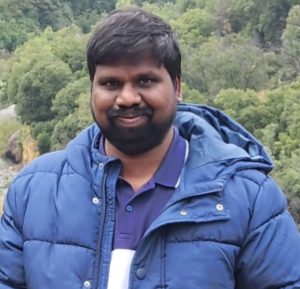
Dr. Gnanaseelan Natarajan Pontificia Universidad Católica de Chile Dr. Gnanaseelan Natarajan earned his Master’s degree in Green Energy Technology from Pondicherry University, where his thesis centered on electrochemical energy storage systems. He subsequently pursued his Ph.D. at IPN CICATA–Altamira, Mexico, conducting research on graphene-based materials for photocatalytic hydrogen generation and sodium-ion capacitors. Throughout his academic career, Dr. Natarajan has actively presented his research at numerous national and international conferences and has published in reputable peer-reviewed journals in the fields of energy harvesting and storage. He is currently a postdoctoral researcher at Pontificia Universidad Católica de Chile, Santiago, where his research focuses on the development of MXene-based materials for triboelectric nanogenerators (TENGs). Beyond the Lab: The Power of DFT in Predicting the Performance of Emerging 2D Materials
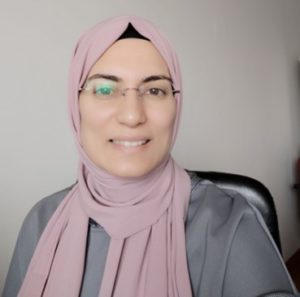
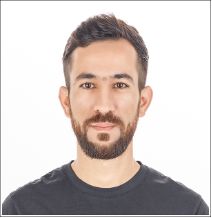
Dr. Mourad Boujnah CINVESTAV, Querétaro, México |





Co-organized by
6th Vocation Promotion in: Circuits and System Design